China Overhauls University Curricula to Prepare Graduates for the AI Era

The rapid advancement of Artificial Intelligence (AI) is not only transforming the way businesses operate but also reshaping higher education.
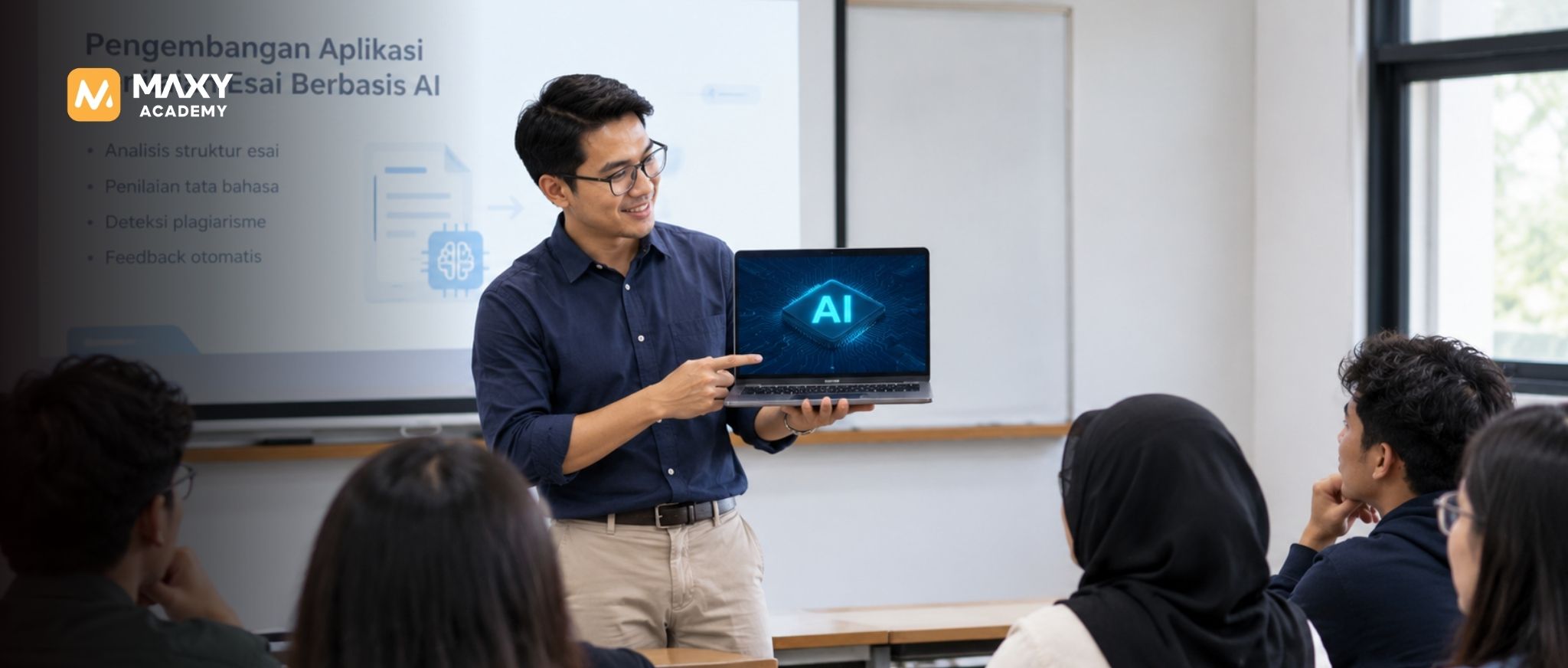
China is one of the latest examples of this shift. Universities across the country are redesigning their curricula to ensure graduates are equipped with the skills needed in an AI-driven economy.
This move sends a clear message: the future of work is evolving quickly. Universities can no longer focus solely on delivering academic knowledge—they must also prepare students with practical skills that align with technological advancements. According to Le Monde, this transformation is part of China's broader effort to strengthen its AI capabilities and develop a workforce ready for the industries of tomorrow.
Traditional Curricula Are Giving Way to AI-Focused Programs
Over the past few years, China has undertaken a major review of its university programs.
As a result, more than 12,000 undergraduate programs have been suspended or discontinued, while over 10,000 new programs have been introduced in fields considered more relevant to future industry needs. Overall, more than 30% of university programs have been adjusted since 2021.
Many of these newly established programs focus on areas such as:
- Artificial Intelligence (AI)
- Robotics
- Semiconductors
- Data Science
- Intelligent Finance
- Digital Economy
- Embodied Intelligence
These changes are part of China's national strategy to accelerate AI adoption across industries while building a talent pipeline capable of supporting long-term technological innovation.
Degree Programs Are Becoming More Interdisciplinary
One of the most significant changes is the growing emphasis on interdisciplinary education.
Several universities are now combining AI with disciplines such as finance, law, economics, and computer science.
The objective is not simply to produce graduates who understand AI technology, but professionals who know how to apply AI within their respective industries.
This reflects an important trend: AI literacy is becoming a core competency for professionals across nearly every field—not just those pursuing engineering or computer science degrees.
Why Is China Making These Changes?
There are several key reasons behind this large-scale educational transformation.
First, AI is rapidly automating routine and repetitive tasks across many industries.
Second, the number of university graduates in China continues to grow each year, making the job market increasingly competitive.
Third, the government wants universities to produce graduates whose skills closely match the evolving needs of employers.
In other words, higher education is being encouraged to become more responsive to technological progress and labor market demands.
Some Academic Fields Are Seeing Reduced Demand
The curriculum overhaul has also affected programs considered less aligned with emerging industry needs.
Certain majors in the humanities, arts, foreign languages, and management have been reduced, merged, or redesigned to incorporate more technology-related content.
For example, some universities are integrating language studies with science and technology to help graduates develop broader, more marketable skill sets.
This does not mean these disciplines are becoming obsolete. Instead, complementary skills such as AI literacy, data analysis, and digital competencies are increasingly valuable regardless of one's academic background.
What Does This Mean for Students and Professionals?
China's approach highlights a broader global trend: higher education is evolving to better reflect the realities of the modern workplace.
A university degree alone may no longer be enough.
Students and working professionals alike will need to continuously develop new skills to remain competitive in an AI-powered economy.
Some of the most valuable competencies include:
- Understanding AI and Generative AI
- Data Analysis
- AI Prompt Engineering
- Workflow Automation
- Problem Solving
- Critical Thinking
- Human-AI Collaboration
The earlier individuals begin building these capabilities, the better prepared they will be for future career opportunities.
What Can Indonesia Learn from This?
China's education reform demonstrates that AI is no longer just an emerging technology—it is becoming a fundamental part of workforce development.
For Indonesia, this serves as a reminder that education and industry must work closely together to ensure graduates possess skills that meet future labor market demands.
For individuals, the message is equally clear: learning should not stop after graduation. Continuous upskilling and reskilling will become essential throughout one's professional career.
Preparing for the AI Era Starts Today
The changes taking place in China illustrate how countries are preparing the next generation to work alongside AI rather than compete against it.
Success in the future workplace will depend not only on understanding AI, but also on knowing how to use it to improve productivity, drive innovation, and solve real-world problems.
That's why investing in AI skills today can become one of the most valuable career decisions for tomorrow.
If you'd like to stay updated on the latest developments in AI, emerging career trends, and opportunities to build future-ready digital skills, keep following MAXY Academy.
Explore insightful content on AI, technology, and career development through MAXY Academy's website and social media channels. The skills you start building today could become your greatest advantage in tomorrow's workforce.