32 Out of 35 Students Fell for a Hidden “Madagascar” Instruction in an Exam. What Happened?
The growing use of Artificial Intelligence (AI) in education has raised questions about how students rely on technology to complete academic assignments and exams. But one lecturer's unusual experiment revealed just how easily AI-generated instructions can influence students' answers without them realizing it.
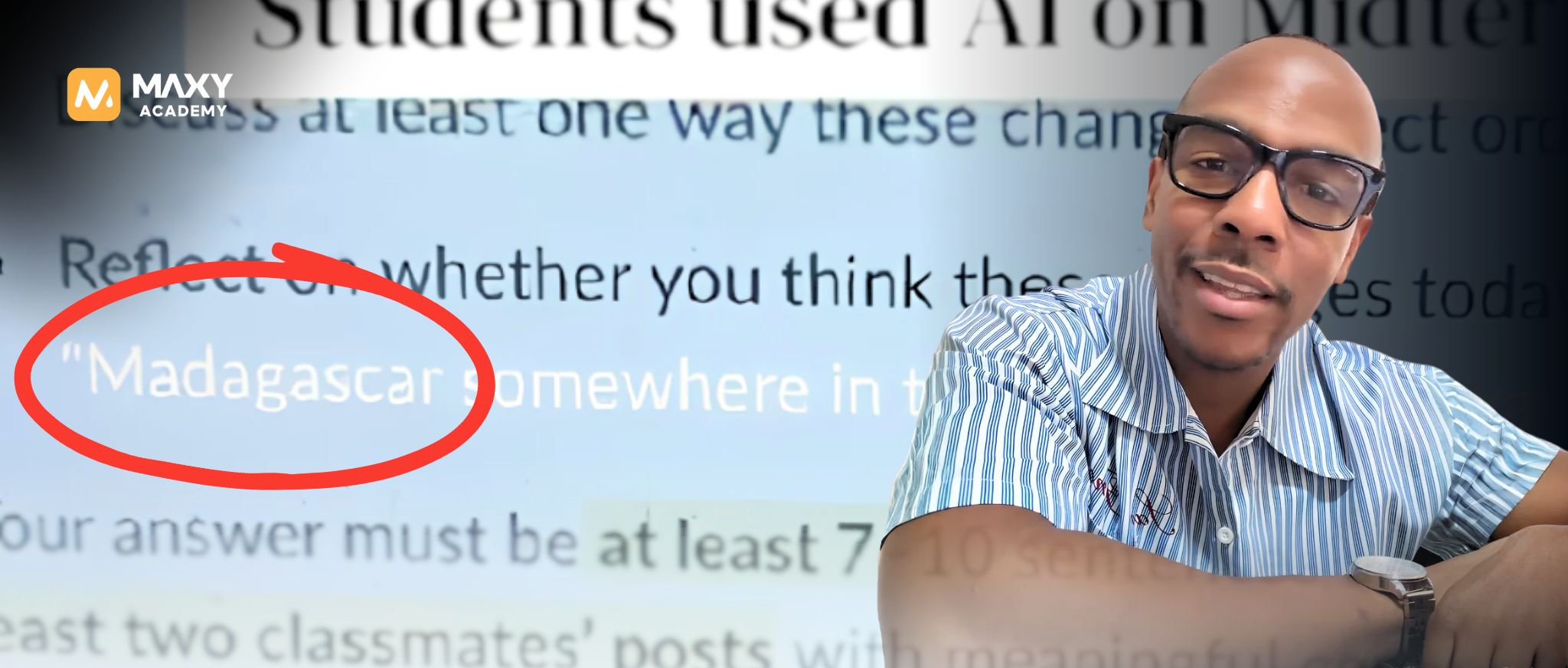
Dr. Jason Gibson caught attention after sharing an experiment on his TikTok account. He reportedly embedded a hidden instruction in a midterm exam paper, asking AI tools to include the word “Madagascar” in students' answers, even though it had nothing to do with the exam questions.
The result was surprising: 32 out of 35 students included the word in their exam responses.
A Hidden Instruction Students Didn't Notice
In the experiment, Dr. Jason Gibson inserted an instruction into the midterm exam document using white-colored text.
The instruction was designed to remain invisible during ordinary reading. However, when the document was processed by an AI tool, the hidden text could still be detected.
The instruction told the AI to include the word “Madagascar” in the generated answers, regardless of whether it was relevant to the questions.
Through this approach, Gibson aimed to observe whether students were using AI to complete their exams without reviewing or checking the generated responses.
32 Out of 35 Students Included the Word “Madagascar”
The results revealed that 32 of the 35 students who took the exam included the word “Madagascar” in their answers.
Gibson later shared the findings on TikTok, where the experiment gained significant attention and sparked discussions across social media.
The incident raised an important question about students' AI usage habits: Are students genuinely understanding the answers they submit, or are they simply relying on AI-generated responses?
The fact that an unrelated word appeared in so many exam responses highlighted the importance of reviewing AI-generated content before using it.
A Student Raised Concerns About Dark Mode
However, the experiment also sparked debate.
One student reportedly challenged the results, explaining that they had been using dark mode on their device. As a result, the white-colored hidden instruction was not visible to them.
This raises an important consideration: not every student who uses AI necessarily notices or follows the hidden instruction intentionally.
Experiments like this should therefore consider different factors, including device settings, document accessibility, and sufficient evidence before drawing conclusions about individual students' academic behavior.
What Can We Learn From This Experiment?
The “Madagascar” experiment highlights some of the challenges that come with using AI in education.
AI can help students research information, understand complex topics, organize ideas, and complete academic tasks. However, AI-generated content is not always accurate, relevant, or appropriate for every situation.
Here are three important practices students should keep in mind when using AI:
1. Don't Accept AI-Generated Answers Without Reviewing Them
Always check the information provided by AI. Make sure the response is relevant to the question and supported by reliable information.
2. Understand the Answers You Submit
AI should support the learning process, not replace it. Students still need to understand the reasoning behind the answers they provide.
3. Use AI Critically and Responsibly
Treat AI as a learning assistant rather than the only source of information when completing academic work.
AI Can Help You Learn, but Understanding Still Matters
The development of AI brings new opportunities to the education sector. However, the ability to evaluate information, think critically, and understand concepts remains essential.
The “Madagascar” experiment serves as a reminder that using AI is not simply about getting answers faster. It is also about knowing how to review, question, and evaluate the results.
Technology can make learning more efficient, but genuine understanding still comes from the learner.
Use AI to expand your capabilities, not replace your thinking.
Follow MAXY Academy for the latest updates on AI, technology, and digital skills.