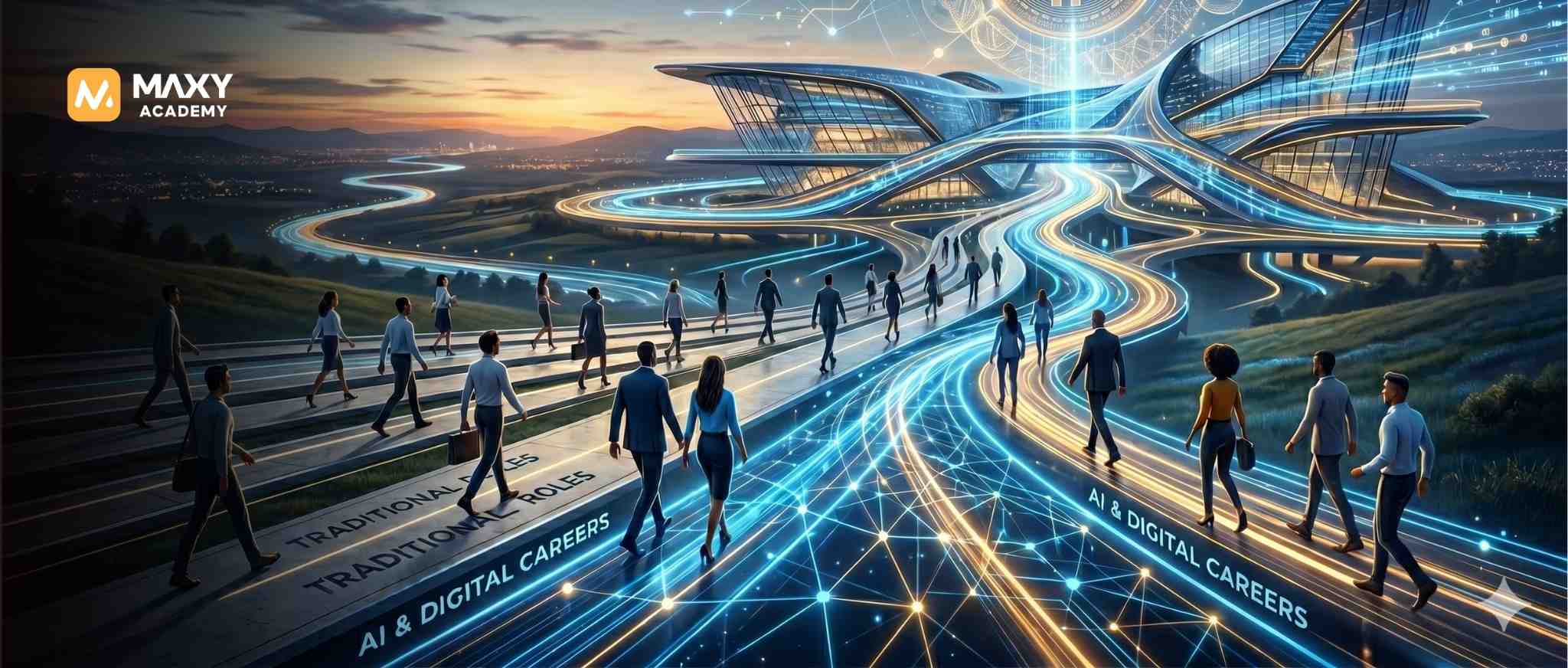
As Artificial Intelligence (AI) continues to advance at an unprecedented pace, the global workforce is entering what could become one of the most significant transformations since the rise of the internet. Tasks that once required human effort are increasingly being automated, business processes are becoming more efficient, and organizations across industries are racing to integrate AI into their operations.
Yet amid the excitement surrounding AI, one question continues to dominate discussions about the future of work: what happens to the workers whose roles are transformed—or even replaced—by these technologies?
That question became even more relevant when reports emerged that OpenAI had allocated up to $250 million to support initiatives aimed at helping workers adapt to the changes brought about by AI. At first glance, the move appears to be a corporate social responsibility effort. However, a closer look suggests something potentially more significant.
When the company building one of the world's most influential AI technologies begins investing hundreds of millions of dollars into workforce adaptation, it raises an important possibility: they may anticipate a much larger wave of labor disruption than many businesses currently expect.
This is no longer just a conversation about technology. It is a conversation about how work itself is changing.
Recent labor market developments suggest that this transformation is already underway. During the first quarter of 2026 alone, the global technology sector recorded approximately 80,000 layoffs. At the same time, major organizations have continued restructuring their operations to align with automation and AI-driven efficiency initiatives. Block reportedly reduced its workforce by around 4,000 employees, while Standard Chartered announced plans affecting more than 7,000 positions as part of broader digital transformation efforts.
While not all workforce reductions can be directly attributed to AI, a clear pattern is emerging. Organizations are increasingly automating repetitive and predictable tasks while placing greater value on employees who can work alongside intelligent systems, interpret insights, and make strategic decisions.
In other words, the demand for human talent is not disappearing. The definition of valuable talent is evolving.
This shift is precisely why reskilling and upskilling have become strategic priorities rather than optional learning initiatives. Many companies still treat AI training as a future project or a supplementary program that can be addressed later. However, history repeatedly shows that organizations that thrive during technological disruptions are those that invest in workforce development before change reaches its peak.
The difference between organizations that successfully navigate transformation and those that struggle is often not the technology itself. It is the readiness of their people.
When businesses wait until productivity declines, competitive pressure intensifies, or critical skills become obsolete, adaptation becomes significantly more expensive and difficult. Conversely, organizations that proactively build learning cultures are better positioned to turn disruption into competitive advantage.
In today's environment, reskilling should no longer be viewed as a defensive measure. It is a growth strategy.
Companies that equip employees with AI literacy, digital capabilities, and adaptive thinking skills are building workforces capable of thriving in rapidly changing markets. These organizations gain not only operational efficiency but also increased agility, innovation, and resilience.
Beyond productivity, AI readiness also has a direct impact on employee well-being. Many professionals are facing uncertainty regarding the future of their careers. Concerns about automation, changing job responsibilities, and evolving skill requirements can affect engagement, confidence, and workplace satisfaction.
As a result, successful AI adoption cannot focus solely on technology implementation. It must also focus on helping people understand, embrace, and benefit from these changes.
AI should not be viewed simply as a replacement for human labor. Instead, it should be seen as a tool that empowers people to work more effectively, eliminate repetitive administrative tasks, and dedicate more time to strategic thinking, creativity, and innovation. When implemented thoughtfully, AI can enhance both organizational performance and employee experience.
This is what makes OpenAI’s $250 million commitment particularly noteworthy. Whether viewed as a social initiative, a strategic investment, or both, the message is difficult to ignore: significant workforce transformation is coming, and preparation cannot wait until disruption becomes a crisis.
The organizations that begin developing AI capabilities today will be far better positioned than those that postpone action until change is unavoidable.
The question is no longer whether AI will reshape the workplace.
The real question is whether companies and professionals are preparing fast enough.
As AI continues to redefine industries, the most valuable asset any organization will have is not simply access to advanced technology, but a workforce capable of evolving alongside it.
Prepare Your Team for the AI Era with MAXY Academy
AI transformation is inevitable, but being unprepared is not.
Through corporate training programs, workshops, and initiatives such as AI for Employee Happiness, MAXY Academy helps organizations build future-ready teams that can leverage AI to improve productivity, adaptability, and employee engagement.
Explore more insights on AI, digital transformation, future workforce trends, and talent development through MAXY Academy’s latest articles. Because in the age of AI, the organizations that succeed will not be those that merely react to change—but those that are prepared to lead it.