ASEAN Is Accelerating AI Adoption—But There's a Challenge Few Are Talking About

Artificial Intelligence (AI) is no longer a technology of the future. Today, it has become an integral part of business strategies, government initiatives, and educational development across ASEAN countries.
From workflow automation and data analytics to customer service and product development, AI adoption is growing at an unprecedented pace. However, behind this rapid transformation lies a challenge that is gaining increasing attention: how can ASEAN countries leverage AI effectively without becoming entirely dependent on technologies developed elsewhere?
Why Does This Matter?
Most AI platforms used today are developed by global technology companies. While these solutions offer significant benefits, they also raise important questions around data governance, information security, and long-term technological independence.
For many countries, the real challenge is not simply gaining access to AI technologies. It is ensuring that their workforce and society possess the skills required to use AI productively, responsibly, and strategically.
The Biggest Challenge Isn't the Technology—It's the Talent
AI technology has become more accessible than ever before. Individuals and organizations can now utilize a wide range of AI-powered tools at relatively affordable costs.
However, access to technology alone does not guarantee meaningful results.
Many organizations continue to face challenges such as:
-
Understanding how to integrate AI into business processes
-
Improving team productivity through AI adoption
-
Building effective AI-powered workflows
-
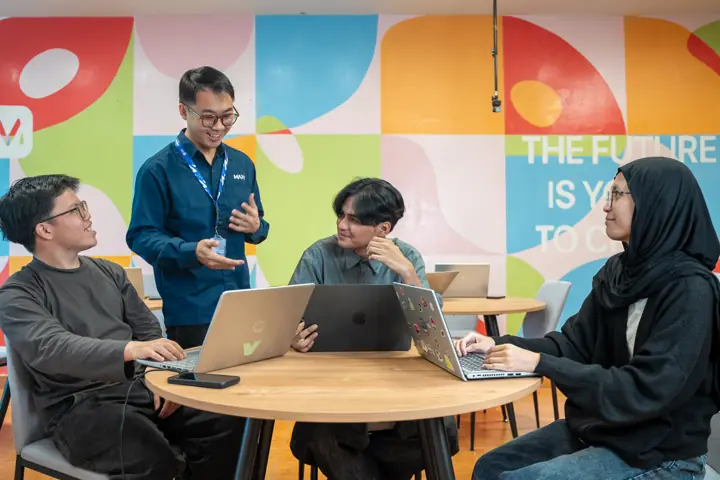
Developing practical AI skills within their workforce
-
Identifying high-impact use cases for AI implementation
This is why talent development has become one of the most critical components of digital transformation.
AI Skills Will Be Essential Across Every Industry
Just as internet literacy and computer skills eventually became standard workplace requirements, AI literacy is expected to become a fundamental competency for the future workforce.
Importantly, this shift is not limited to technical professionals.
AI skills are becoming increasingly valuable for:
-
Marketing teams
-
Human Resources professionals
-
Customer Service teams
-
Sales representatives
-
Operations specialists
-
Content creators
-
Business managers and executives
The ability to use AI to improve efficiency, enhance creativity, and support data-driven decision-making will provide a significant advantage for both individuals and organizations.
Preparing the Next Generation of AI Talent
As AI adoption accelerates across ASEAN, organizations that adapt faster will gain a stronger competitive advantage.
For this reason, investing in AI upskilling and workforce development has become a strategic priority—not only for companies looking to accelerate business transformation, but also for professionals seeking to remain competitive in an evolving job market.
The question is no longer whether AI will become part of our daily work.
The real question is:
Are we ready to use it effectively?
Building Industry-Relevant AI Skills for the Future
As a digital talent and AI development platform, MAXY Academy helps individuals, professionals, and organizations understand and implement AI through practical, industry-relevant learning programs.
By focusing on real-world applications and hands-on implementation, participants learn how to leverage AI to improve productivity, streamline workflows, and drive meaningful innovation within their organizations.
Because in the AI era, success will not belong solely to those with access to the best technology—it will belong to those who are best prepared to use it.